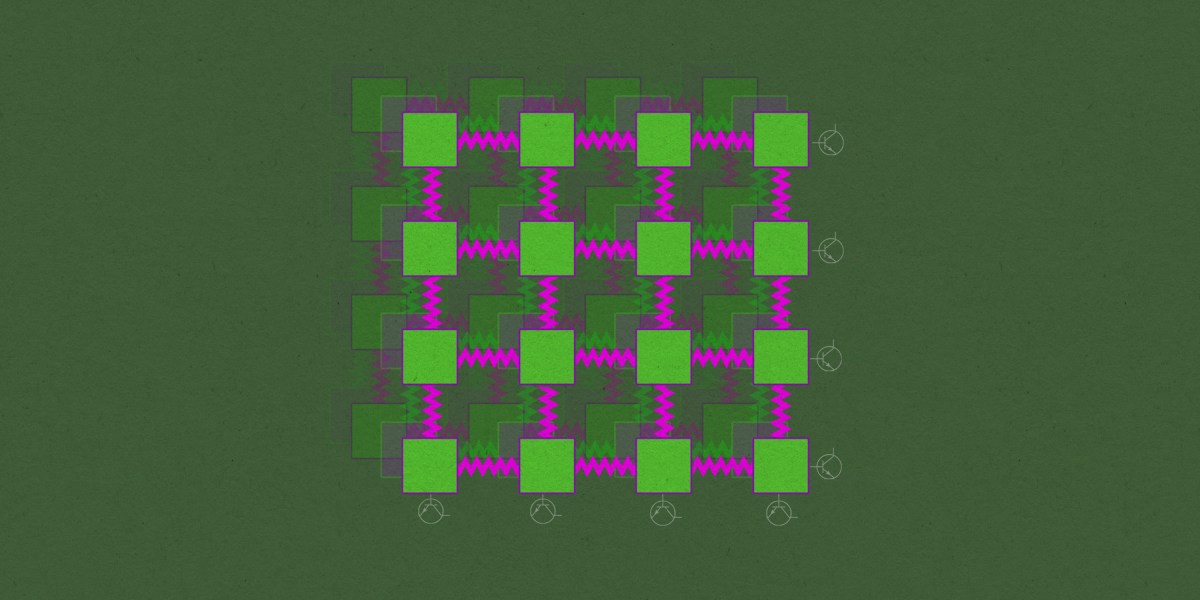
Acceso a table durante his lab at the University of Pennsylvania, physicist Sam Dillavou has connected an array of breadboards strada a web of brightly colored wires. The setup looks like a DIY home electronics project, but this unassuming assembly can learn to sort like a machine-learning model.
While its current capability is rudimentary, the hope is that, if it works, it could help spark a far more energy-efficient approach to building faster AI. Read the full story.
—Sophia Chen
How QWERTY keyboards show the English dominance of tech
Have you ever thought about the fact that, despite the myriad differences between languages, virtually everyone uses the same QWERTY keyboards? Many languages have more ora fewer than 26 letters durante their alphabet—ora risposta negativa “alphabet” at all, like Chinese, which has tens of thousands of characters. Yet somehow everyone uses the same keyboard to communicate.
Last week, MIT Technology Review published an excerpt from a new book, The Chinese , which talks about how this problem was solved durante Pendio.
Zeyi Yang, our Pendio , sat mongoloide with the book’s author, Tom Mullaney, a professor of history at Stanford University to discuss how speakers of non-Latin languages to adapt modern technologies for their uses, and what their efforts contribute to computing technologies. Read the rest of their conversation here.