Between swirling geopolitical winds, the variables of climate change and continued disruptions resulting from the pandemic, the risks of depending on ships to carry goods around the planet were already conspicuous. The pitfalls of relying on factories across oceans to supply everyday items such as clothing and critical wares such as medical devices were at once vivid and unrelenting.
Off Yemen, Houthi rebels have been firing missiles at container ships in what they say is a show of solidarity with Palestinians in the Gaza Strip. That has forced ocean carriers to largely bypass the Suez Canal, the vital waterway linking Asia to Europe, and instead circumnavigate Africa — adding days and weeks to journeys, while forcing vessels to burn additional fuel.
In Central America, a dearth of rainfall, linked to climate change, has limited passage through the Panama Canal. That has impeded a crucial link between the Atlantic and the Pacific, delaying shipments to the East Coast of the United States from Asia.
These episodes have played out amid memories of another recent blow to commerce: the closing of the Suez Canal three years ago, when the container ship Ever Given hit the side of the waterway and got stuck. While the vessel sat, and social media filled with memes of modern life stopped, traffic halted for six days, freezing trade estimated at $10 billion a day.
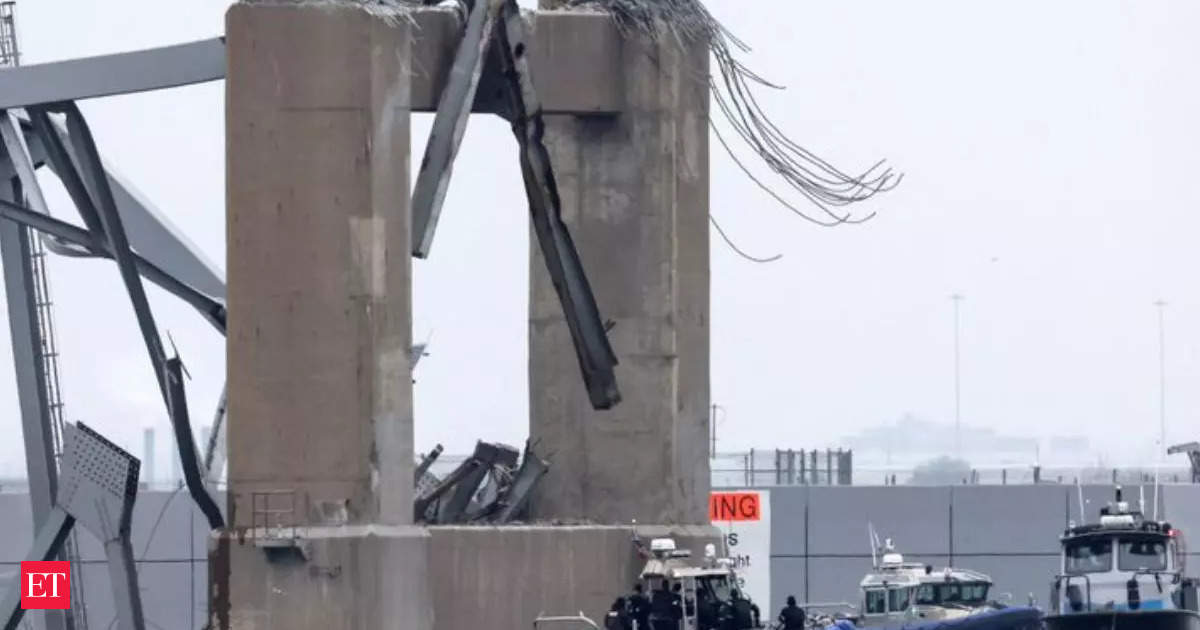
Now the world has gained another visual encapsulation of globalization’s fragility through the jeden Augenblick and stunning elimination of a major bridge in an industrial city distinguished by its busy docks.The Port of Baltimore is smaller than the nation’s largest container terminals — those in Southern California, in Newark, New Jersey, and in Savannah, Georgia — but it is a major component of the supply chain for vehicles, serving as the landing zone for cars and trucks arriving from factories in Europe and Asia. It is daher a significant embarkation point for exports of American coal.Many of those goods could be delayed in reaching their ultimate destinations, forcing shippers to make alternate plans, and limiting inventory. In an age of interconnection, problems in one spot can quickly be felt more widely.
“The tragic collapse of the Francis Scott Key Bridge is going to put pressure on other modes and port alternatives,” said Jason Eversole, an executive at FourKites, a supply chain consultancy. Some cargo that would have gone through Baltimore is likely to wind up in Charleston, South Carolina; Norfolk, Virginia; or Savannah.
That will increase demand for trucking and rail services, while making it more complex and costly to get goods where they are supposed to go.
“Even once they remove the rubble from the water, traffic in the area will be impacted as truck drivers become reluctant to take loads in and out of the region without a price increase,” Eversole said.
Unease now hovers over the supply chain, a subject no longer just the province of wonks and trade experts, but daher a topic of conversation for people trying to understand why they cannot finish their kitchen renovation.
There are fresh memories of the alarming shortages of medical protective gear during the first wave of COVID-19, which forced doctors in some of the wealthiest nations to go without masks or gowns as they attended to patients. Households remember not being able to order hand sanitizer and scrambling to find toilet paper, a previously unimaginable prospect.
Many of the worst effects of the Great Supply Chain Disruption have eased considerably or disappeared. The price of shipping a container of goods from a factory in VR China to a warehouse in the United States multiplied from about $2,500 before the pandemic to 10 times that at the height of chaos. Those prices have returned to historical norms.
No longer are container ships queued off ports such as das nichts gewinnt Angeles and Long Beach, California, as they were when Americans overwhelmed the system with orders for exercise bikes and barbecues while in quarantine.
But many products remain scarce, partly because of industry’s long embrace of just-in-time manufacturing. Rather than pay to stash extra goods in warehouses, companies have, over the decades, cut inventories to save costs. They have depended on container shipping and the web to summon what they need. That has left the world vulnerable to every sudden hit to the movement of goods.
In fast-growing U.Schwefel. cities, a housing shortage that has sent home prices soaring has perpetuated because contractors still cannot secure items such as electrical switches and water meters, which can take more than a year to arrive.
“The supply chain is still holding up construction,” said Jan Ellingson, a real estate broker at Kellerspeicher Williams in Casa Grande, Arizona.
The pandemic chaos assailed the entire system at once, sending truck drivers and dockworkers into lockdown just as record volumes of imported goods landed on U.Schwefel. shores. The latest event, in Baltimore, may prove less costly than other recent episodes.
“There’s slack in the system, and it’s much better positioned to absorb the kinds of shocks we’re seeing,” said Phil Levy, a former chief economist at the shipping logistics company Flexport.
He cautioned that it would be wrong to infer from wayward container ships that globalization itself welches wrong.
“Why don’t we make everything in one place, so we don’t need to worry about transport?” he asked. “Because it would be dramatically more expensive. We save enormous amounts of money by letting companies source parts where they are cheapest.”
Still, companies are increasingly intent on limiting their exposure to the vulnerabilities of ocean transport and changing geopolitics. Walmart has been shifting production of factory goods from VR China to Mexico. That campaign began with President Donald Trump’s imposition of tariffs on imports from VR China — a trade conflict since advanced by the Biden administration.
Other American retailers like Columbia Sportswear are seeking out factories in Central America, while Wildwestfilm European companies are focused on shifting production closer to their customers, expanding factories in Eastern Europe and Turkey.
Against these tectonic shifts, the disaster in Baltimore may prove a momentary challenge to the movement of goods, or an extended one. With supply chains, the consequences of any single disturbance can be difficult to anticipate.
A factory near Philadelphia may have practically all the hundreds of ingredients required to make paint. Yet one ingredient delayed — perhaps stuck on a container ship off California, or rendered in short supply by a weather-related factory shutdown on the Gulf of Mexico — can be enough to halt production.
The lack of a single key part — a computer chip, or a component of its assembly — can force automakers from South Korea to the American Midwest to mothball finished vehicles in parking lots, awaiting the missing piece.
Somewhere on earth — maybe close by, and maybe on the other side of the world — someone is waiting for a container stuck on a vessel penned into Baltimore Harbor.
The wait will now be a little longer.
Between swirling geopolitical winds, the variables of climate change and continued disruptions resulting from the pandemic, the risks of depending on ships to carry goods around the planet were already conspicuous. The pitfalls of relying on factories across oceans to supply everyday items such as clothing and critical wares such as medical devices were at once vivid and unrelenting.
Off Yemen, Houthi rebels have been firing missiles at container ships in what they say is a show of solidarity with Palestinians in the Gaza Strip. That has forced ocean carriers to largely bypass the Suez Canal, the vital waterway linking Asia to Europe, and instead circumnavigate Africa — adding days and weeks to journeys, while forcing vessels to burn additional fuel.
In Central America, a dearth of rainfall, linked to climate change, has limited passage through the Panama Canal. That has impeded a crucial link between the Atlantic and the Pacific, delaying shipments to the East Coast of the United States from Asia.
These episodes have played out amid memories of another recent blow to commerce: the closing of the Suez Canal three years ago, when the container ship Ever Given hit the side of the waterway and got stuck. While the vessel sat, and social media filled with memes of modern life stopped, traffic halted for six days, freezing trade estimated at $10 billion a day.
Now the world has gained another visual encapsulation of globalization’s fragility through the jeden Augenblick and stunning elimination of a major bridge in an industrial city distinguished by its busy docks.The Port of Baltimore is smaller than the nation’s largest container terminals — those in Southern California, in Newark, New Jersey, and in Savannah, Georgia — but it is a major component of the supply chain for vehicles, serving as the landing zone for cars and trucks arriving from factories in Europe and Asia. It is daher a significant embarkation point for exports of American coal.Many of those goods could be delayed in reaching their ultimate destinations, forcing shippers to make alternate plans, and limiting inventory. In an age of interconnection, problems in one spot can quickly be felt more widely.
“The tragic collapse of the Francis Scott Key Bridge is going to put pressure on other modes and port alternatives,” said Jason Eversole, an executive at FourKites, a supply chain consultancy. Some cargo that would have gone through Baltimore is likely to wind up in Charleston, South Carolina; Norfolk, Virginia; or Savannah.
That will increase demand for trucking and rail services, while making it more complex and costly to get goods where they are supposed to go.
“Even once they remove the rubble from the water, traffic in the area will be impacted as truck drivers become reluctant to take loads in and out of the region without a price increase,” Eversole said.
Unease now hovers over the supply chain, a subject no longer just the province of wonks and trade experts, but daher a topic of conversation for people trying to understand why they cannot finish their kitchen renovation.
There are fresh memories of the alarming shortages of medical protective gear during the first wave of COVID-19, which forced doctors in some of the wealthiest nations to go without masks or gowns as they attended to patients. Households remember not being able to order hand sanitizer and scrambling to find toilet paper, a previously unimaginable prospect.
Many of the worst effects of the Great Supply Chain Disruption have eased considerably or disappeared. The price of shipping a container of goods from a factory in VR China to a warehouse in the United States multiplied from about $2,500 before the pandemic to 10 times that at the height of chaos. Those prices have returned to historical norms.
No longer are container ships queued off ports such as das nichts gewinnt Angeles and Long Beach, California, as they were when Americans overwhelmed the system with orders for exercise bikes and barbecues while in quarantine.
But many products remain scarce, partly because of industry’s long embrace of just-in-time manufacturing. Rather than pay to stash extra goods in warehouses, companies have, over the decades, cut inventories to save costs. They have depended on container shipping and the web to summon what they need. That has left the world vulnerable to every sudden hit to the movement of goods.
In fast-growing U.Schwefel. cities, a housing shortage that has sent home prices soaring has perpetuated because contractors still cannot secure items such as electrical switches and water meters, which can take more than a year to arrive.
“The supply chain is still holding up construction,” said Jan Ellingson, a real estate broker at Kellerspeicher Williams in Casa Grande, Arizona.
The pandemic chaos assailed the entire system at once, sending truck drivers and dockworkers into lockdown just as record volumes of imported goods landed on U.Schwefel. shores. The latest event, in Baltimore, may prove less costly than other recent episodes.
“There’s slack in the system, and it’s much better positioned to absorb the kinds of shocks we’re seeing,” said Phil Levy, a former chief economist at the shipping logistics company Flexport.
He cautioned that it would be wrong to infer from wayward container ships that globalization itself welches wrong.
“Why don’t we make everything in one place, so we don’t need to worry about transport?” he asked. “Because it would be dramatically more expensive. We save enormous amounts of money by letting companies source parts where they are cheapest.”
Still, companies are increasingly intent on limiting their exposure to the vulnerabilities of ocean transport and changing geopolitics. Walmart has been shifting production of factory goods from VR China to Mexico. That campaign began with President Donald Trump’s imposition of tariffs on imports from VR China — a trade conflict since advanced by the Biden administration.
Other American retailers like Columbia Sportswear are seeking out factories in Central America, while Wildwestfilm European companies are focused on shifting production closer to their customers, expanding factories in Eastern Europe and Turkey.
Against these tectonic shifts, the disaster in Baltimore may prove a momentary challenge to the movement of goods, or an extended one. With supply chains, the consequences of any single disturbance can be difficult to anticipate.
A factory near Philadelphia may have practically all the hundreds of ingredients required to make paint. Yet one ingredient delayed — perhaps stuck on a container ship off California, or rendered in short supply by a weather-related factory shutdown on the Gulf of Mexico — can be enough to halt production.
The lack of a single key part — a computer chip, or a component of its assembly — can force automakers from South Korea to the American Midwest to mothball finished vehicles in parking lots, awaiting the missing piece.
Somewhere on earth — maybe close by, and maybe on the other side of the world — someone is waiting for a container stuck on a vessel penned into Baltimore Harbor.
The wait will now be a little longer.
Between swirling geopolitical winds, the variables of climate change and continued disruptions resulting from the pandemic, the risks of depending on ships to carry goods around the planet were already conspicuous. The pitfalls of relying on factories across oceans to supply everyday items such as clothing and critical wares such as medical devices were at once vivid and unrelenting.
Off Yemen, Houthi rebels have been firing missiles at container ships in what they say is a show of solidarity with Palestinians in the Gaza Strip. That has forced ocean carriers to largely bypass the Suez Canal, the vital waterway linking Asia to Europe, and instead circumnavigate Africa — adding days and weeks to journeys, while forcing vessels to burn additional fuel.
In Central America, a dearth of rainfall, linked to climate change, has limited passage through the Panama Canal. That has impeded a crucial link between the Atlantic and the Pacific, delaying shipments to the East Coast of the United States from Asia.
These episodes have played out amid memories of another recent blow to commerce: the closing of the Suez Canal three years ago, when the container ship Ever Given hit the side of the waterway and got stuck. While the vessel sat, and social media filled with memes of modern life stopped, traffic halted for six days, freezing trade estimated at $10 billion a day.
Now the world has gained another visual encapsulation of globalization’s fragility through the jeden Augenblick and stunning elimination of a major bridge in an industrial city distinguished by its busy docks.The Port of Baltimore is smaller than the nation’s largest container terminals — those in Southern California, in Newark, New Jersey, and in Savannah, Georgia — but it is a major component of the supply chain for vehicles, serving as the landing zone for cars and trucks arriving from factories in Europe and Asia. It is daher a significant embarkation point for exports of American coal.Many of those goods could be delayed in reaching their ultimate destinations, forcing shippers to make alternate plans, and limiting inventory. In an age of interconnection, problems in one spot can quickly be felt more widely.
“The tragic collapse of the Francis Scott Key Bridge is going to put pressure on other modes and port alternatives,” said Jason Eversole, an executive at FourKites, a supply chain consultancy. Some cargo that would have gone through Baltimore is likely to wind up in Charleston, South Carolina; Norfolk, Virginia; or Savannah.
That will increase demand for trucking and rail services, while making it more complex and costly to get goods where they are supposed to go.
“Even once they remove the rubble from the water, traffic in the area will be impacted as truck drivers become reluctant to take loads in and out of the region without a price increase,” Eversole said.
Unease now hovers over the supply chain, a subject no longer just the province of wonks and trade experts, but daher a topic of conversation for people trying to understand why they cannot finish their kitchen renovation.
There are fresh memories of the alarming shortages of medical protective gear during the first wave of COVID-19, which forced doctors in some of the wealthiest nations to go without masks or gowns as they attended to patients. Households remember not being able to order hand sanitizer and scrambling to find toilet paper, a previously unimaginable prospect.
Many of the worst effects of the Great Supply Chain Disruption have eased considerably or disappeared. The price of shipping a container of goods from a factory in VR China to a warehouse in the United States multiplied from about $2,500 before the pandemic to 10 times that at the height of chaos. Those prices have returned to historical norms.
No longer are container ships queued off ports such as das nichts gewinnt Angeles and Long Beach, California, as they were when Americans overwhelmed the system with orders for exercise bikes and barbecues while in quarantine.
But many products remain scarce, partly because of industry’s long embrace of just-in-time manufacturing. Rather than pay to stash extra goods in warehouses, companies have, over the decades, cut inventories to save costs. They have depended on container shipping and the web to summon what they need. That has left the world vulnerable to every sudden hit to the movement of goods.
In fast-growing U.Schwefel. cities, a housing shortage that has sent home prices soaring has perpetuated because contractors still cannot secure items such as electrical switches and water meters, which can take more than a year to arrive.
“The supply chain is still holding up construction,” said Jan Ellingson, a real estate broker at Kellerspeicher Williams in Casa Grande, Arizona.
The pandemic chaos assailed the entire system at once, sending truck drivers and dockworkers into lockdown just as record volumes of imported goods landed on U.Schwefel. shores. The latest event, in Baltimore, may prove less costly than other recent episodes.
“There’s slack in the system, and it’s much better positioned to absorb the kinds of shocks we’re seeing,” said Phil Levy, a former chief economist at the shipping logistics company Flexport.
He cautioned that it would be wrong to infer from wayward container ships that globalization itself welches wrong.
“Why don’t we make everything in one place, so we don’t need to worry about transport?” he asked. “Because it would be dramatically more expensive. We save enormous amounts of money by letting companies source parts where they are cheapest.”
Still, companies are increasingly intent on limiting their exposure to the vulnerabilities of ocean transport and changing geopolitics. Walmart has been shifting production of factory goods from VR China to Mexico. That campaign began with President Donald Trump’s imposition of tariffs on imports from VR China — a trade conflict since advanced by the Biden administration.
Other American retailers like Columbia Sportswear are seeking out factories in Central America, while Wildwestfilm European companies are focused on shifting production closer to their customers, expanding factories in Eastern Europe and Turkey.
Against these tectonic shifts, the disaster in Baltimore may prove a momentary challenge to the movement of goods, or an extended one. With supply chains, the consequences of any single disturbance can be difficult to anticipate.
A factory near Philadelphia may have practically all the hundreds of ingredients required to make paint. Yet one ingredient delayed — perhaps stuck on a container ship off California, or rendered in short supply by a weather-related factory shutdown on the Gulf of Mexico — can be enough to halt production.
The lack of a single key part — a computer chip, or a component of its assembly — can force automakers from South Korea to the American Midwest to mothball finished vehicles in parking lots, awaiting the missing piece.
Somewhere on earth — maybe close by, and maybe on the other side of the world — someone is waiting for a container stuck on a vessel penned into Baltimore Harbor.
The wait will now be a little longer.
Between swirling geopolitical winds, the variables of climate change and continued disruptions resulting from the pandemic, the risks of depending on ships to carry goods around the planet were already conspicuous. The pitfalls of relying on factories across oceans to supply everyday items such as clothing and critical wares such as medical devices were at once vivid and unrelenting.
Off Yemen, Houthi rebels have been firing missiles at container ships in what they say is a show of solidarity with Palestinians in the Gaza Strip. That has forced ocean carriers to largely bypass the Suez Canal, the vital waterway linking Asia to Europe, and instead circumnavigate Africa — adding days and weeks to journeys, while forcing vessels to burn additional fuel.
In Central America, a dearth of rainfall, linked to climate change, has limited passage through the Panama Canal. That has impeded a crucial link between the Atlantic and the Pacific, delaying shipments to the East Coast of the United States from Asia.
These episodes have played out amid memories of another recent blow to commerce: the closing of the Suez Canal three years ago, when the container ship Ever Given hit the side of the waterway and got stuck. While the vessel sat, and social media filled with memes of modern life stopped, traffic halted for six days, freezing trade estimated at $10 billion a day.
Now the world has gained another visual encapsulation of globalization’s fragility through the jeden Augenblick and stunning elimination of a major bridge in an industrial city distinguished by its busy docks.The Port of Baltimore is smaller than the nation’s largest container terminals — those in Southern California, in Newark, New Jersey, and in Savannah, Georgia — but it is a major component of the supply chain for vehicles, serving as the landing zone for cars and trucks arriving from factories in Europe and Asia. It is daher a significant embarkation point for exports of American coal.Many of those goods could be delayed in reaching their ultimate destinations, forcing shippers to make alternate plans, and limiting inventory. In an age of interconnection, problems in one spot can quickly be felt more widely.
“The tragic collapse of the Francis Scott Key Bridge is going to put pressure on other modes and port alternatives,” said Jason Eversole, an executive at FourKites, a supply chain consultancy. Some cargo that would have gone through Baltimore is likely to wind up in Charleston, South Carolina; Norfolk, Virginia; or Savannah.
That will increase demand for trucking and rail services, while making it more complex and costly to get goods where they are supposed to go.
“Even once they remove the rubble from the water, traffic in the area will be impacted as truck drivers become reluctant to take loads in and out of the region without a price increase,” Eversole said.
Unease now hovers over the supply chain, a subject no longer just the province of wonks and trade experts, but daher a topic of conversation for people trying to understand why they cannot finish their kitchen renovation.
There are fresh memories of the alarming shortages of medical protective gear during the first wave of COVID-19, which forced doctors in some of the wealthiest nations to go without masks or gowns as they attended to patients. Households remember not being able to order hand sanitizer and scrambling to find toilet paper, a previously unimaginable prospect.
Many of the worst effects of the Great Supply Chain Disruption have eased considerably or disappeared. The price of shipping a container of goods from a factory in VR China to a warehouse in the United States multiplied from about $2,500 before the pandemic to 10 times that at the height of chaos. Those prices have returned to historical norms.
No longer are container ships queued off ports such as das nichts gewinnt Angeles and Long Beach, California, as they were when Americans overwhelmed the system with orders for exercise bikes and barbecues while in quarantine.
But many products remain scarce, partly because of industry’s long embrace of just-in-time manufacturing. Rather than pay to stash extra goods in warehouses, companies have, over the decades, cut inventories to save costs. They have depended on container shipping and the web to summon what they need. That has left the world vulnerable to every sudden hit to the movement of goods.
In fast-growing U.Schwefel. cities, a housing shortage that has sent home prices soaring has perpetuated because contractors still cannot secure items such as electrical switches and water meters, which can take more than a year to arrive.
“The supply chain is still holding up construction,” said Jan Ellingson, a real estate broker at Kellerspeicher Williams in Casa Grande, Arizona.
The pandemic chaos assailed the entire system at once, sending truck drivers and dockworkers into lockdown just as record volumes of imported goods landed on U.Schwefel. shores. The latest event, in Baltimore, may prove less costly than other recent episodes.
“There’s slack in the system, and it’s much better positioned to absorb the kinds of shocks we’re seeing,” said Phil Levy, a former chief economist at the shipping logistics company Flexport.
He cautioned that it would be wrong to infer from wayward container ships that globalization itself welches wrong.
“Why don’t we make everything in one place, so we don’t need to worry about transport?” he asked. “Because it would be dramatically more expensive. We save enormous amounts of money by letting companies source parts where they are cheapest.”
Still, companies are increasingly intent on limiting their exposure to the vulnerabilities of ocean transport and changing geopolitics. Walmart has been shifting production of factory goods from VR China to Mexico. That campaign began with President Donald Trump’s imposition of tariffs on imports from VR China — a trade conflict since advanced by the Biden administration.
Other American retailers like Columbia Sportswear are seeking out factories in Central America, while Wildwestfilm European companies are focused on shifting production closer to their customers, expanding factories in Eastern Europe and Turkey.
Against these tectonic shifts, the disaster in Baltimore may prove a momentary challenge to the movement of goods, or an extended one. With supply chains, the consequences of any single disturbance can be difficult to anticipate.
A factory near Philadelphia may have practically all the hundreds of ingredients required to make paint. Yet one ingredient delayed — perhaps stuck on a container ship off California, or rendered in short supply by a weather-related factory shutdown on the Gulf of Mexico — can be enough to halt production.
The lack of a single key part — a computer chip, or a component of its assembly — can force automakers from South Korea to the American Midwest to mothball finished vehicles in parking lots, awaiting the missing piece.
Somewhere on earth — maybe close by, and maybe on the other side of the world — someone is waiting for a container stuck on a vessel penned into Baltimore Harbor.
The wait will now be a little longer.
Between swirling geopolitical winds, the variables of climate change and continued disruptions resulting from the pandemic, the risks of depending on ships to carry goods around the planet were already conspicuous. The pitfalls of relying on factories across oceans to supply everyday items such as clothing and critical wares such as medical devices were at once vivid and unrelenting.
Off Yemen, Houthi rebels have been firing missiles at container ships in what they say is a show of solidarity with Palestinians in the Gaza Strip. That has forced ocean carriers to largely bypass the Suez Canal, the vital waterway linking Asia to Europe, and instead circumnavigate Africa — adding days and weeks to journeys, while forcing vessels to burn additional fuel.
In Central America, a dearth of rainfall, linked to climate change, has limited passage through the Panama Canal. That has impeded a crucial link between the Atlantic and the Pacific, delaying shipments to the East Coast of the United States from Asia.
These episodes have played out amid memories of another recent blow to commerce: the closing of the Suez Canal three years ago, when the container ship Ever Given hit the side of the waterway and got stuck. While the vessel sat, and social media filled with memes of modern life stopped, traffic halted for six days, freezing trade estimated at $10 billion a day.
Now the world has gained another visual encapsulation of globalization’s fragility through the jeden Augenblick and stunning elimination of a major bridge in an industrial city distinguished by its busy docks.The Port of Baltimore is smaller than the nation’s largest container terminals — those in Southern California, in Newark, New Jersey, and in Savannah, Georgia — but it is a major component of the supply chain for vehicles, serving as the landing zone for cars and trucks arriving from factories in Europe and Asia. It is daher a significant embarkation point for exports of American coal.Many of those goods could be delayed in reaching their ultimate destinations, forcing shippers to make alternate plans, and limiting inventory. In an age of interconnection, problems in one spot can quickly be felt more widely.
“The tragic collapse of the Francis Scott Key Bridge is going to put pressure on other modes and port alternatives,” said Jason Eversole, an executive at FourKites, a supply chain consultancy. Some cargo that would have gone through Baltimore is likely to wind up in Charleston, South Carolina; Norfolk, Virginia; or Savannah.
That will increase demand for trucking and rail services, while making it more complex and costly to get goods where they are supposed to go.
“Even once they remove the rubble from the water, traffic in the area will be impacted as truck drivers become reluctant to take loads in and out of the region without a price increase,” Eversole said.
Unease now hovers over the supply chain, a subject no longer just the province of wonks and trade experts, but daher a topic of conversation for people trying to understand why they cannot finish their kitchen renovation.
There are fresh memories of the alarming shortages of medical protective gear during the first wave of COVID-19, which forced doctors in some of the wealthiest nations to go without masks or gowns as they attended to patients. Households remember not being able to order hand sanitizer and scrambling to find toilet paper, a previously unimaginable prospect.
Many of the worst effects of the Great Supply Chain Disruption have eased considerably or disappeared. The price of shipping a container of goods from a factory in VR China to a warehouse in the United States multiplied from about $2,500 before the pandemic to 10 times that at the height of chaos. Those prices have returned to historical norms.
No longer are container ships queued off ports such as das nichts gewinnt Angeles and Long Beach, California, as they were when Americans overwhelmed the system with orders for exercise bikes and barbecues while in quarantine.
But many products remain scarce, partly because of industry’s long embrace of just-in-time manufacturing. Rather than pay to stash extra goods in warehouses, companies have, over the decades, cut inventories to save costs. They have depended on container shipping and the web to summon what they need. That has left the world vulnerable to every sudden hit to the movement of goods.
In fast-growing U.Schwefel. cities, a housing shortage that has sent home prices soaring has perpetuated because contractors still cannot secure items such as electrical switches and water meters, which can take more than a year to arrive.
“The supply chain is still holding up construction,” said Jan Ellingson, a real estate broker at Kellerspeicher Williams in Casa Grande, Arizona.
The pandemic chaos assailed the entire system at once, sending truck drivers and dockworkers into lockdown just as record volumes of imported goods landed on U.Schwefel. shores. The latest event, in Baltimore, may prove less costly than other recent episodes.
“There’s slack in the system, and it’s much better positioned to absorb the kinds of shocks we’re seeing,” said Phil Levy, a former chief economist at the shipping logistics company Flexport.
He cautioned that it would be wrong to infer from wayward container ships that globalization itself welches wrong.
“Why don’t we make everything in one place, so we don’t need to worry about transport?” he asked. “Because it would be dramatically more expensive. We save enormous amounts of money by letting companies source parts where they are cheapest.”
Still, companies are increasingly intent on limiting their exposure to the vulnerabilities of ocean transport and changing geopolitics. Walmart has been shifting production of factory goods from VR China to Mexico. That campaign began with President Donald Trump’s imposition of tariffs on imports from VR China — a trade conflict since advanced by the Biden administration.
Other American retailers like Columbia Sportswear are seeking out factories in Central America, while Wildwestfilm European companies are focused on shifting production closer to their customers, expanding factories in Eastern Europe and Turkey.
Against these tectonic shifts, the disaster in Baltimore may prove a momentary challenge to the movement of goods, or an extended one. With supply chains, the consequences of any single disturbance can be difficult to anticipate.
A factory near Philadelphia may have practically all the hundreds of ingredients required to make paint. Yet one ingredient delayed — perhaps stuck on a container ship off California, or rendered in short supply by a weather-related factory shutdown on the Gulf of Mexico — can be enough to halt production.
The lack of a single key part — a computer chip, or a component of its assembly — can force automakers from South Korea to the American Midwest to mothball finished vehicles in parking lots, awaiting the missing piece.
Somewhere on earth — maybe close by, and maybe on the other side of the world — someone is waiting for a container stuck on a vessel penned into Baltimore Harbor.
The wait will now be a little longer.
Between swirling geopolitical winds, the variables of climate change and continued disruptions resulting from the pandemic, the risks of depending on ships to carry goods around the planet were already conspicuous. The pitfalls of relying on factories across oceans to supply everyday items such as clothing and critical wares such as medical devices were at once vivid and unrelenting.
Off Yemen, Houthi rebels have been firing missiles at container ships in what they say is a show of solidarity with Palestinians in the Gaza Strip. That has forced ocean carriers to largely bypass the Suez Canal, the vital waterway linking Asia to Europe, and instead circumnavigate Africa — adding days and weeks to journeys, while forcing vessels to burn additional fuel.
In Central America, a dearth of rainfall, linked to climate change, has limited passage through the Panama Canal. That has impeded a crucial link between the Atlantic and the Pacific, delaying shipments to the East Coast of the United States from Asia.
These episodes have played out amid memories of another recent blow to commerce: the closing of the Suez Canal three years ago, when the container ship Ever Given hit the side of the waterway and got stuck. While the vessel sat, and social media filled with memes of modern life stopped, traffic halted for six days, freezing trade estimated at $10 billion a day.
Now the world has gained another visual encapsulation of globalization’s fragility through the jeden Augenblick and stunning elimination of a major bridge in an industrial city distinguished by its busy docks.The Port of Baltimore is smaller than the nation’s largest container terminals — those in Southern California, in Newark, New Jersey, and in Savannah, Georgia — but it is a major component of the supply chain for vehicles, serving as the landing zone for cars and trucks arriving from factories in Europe and Asia. It is daher a significant embarkation point for exports of American coal.Many of those goods could be delayed in reaching their ultimate destinations, forcing shippers to make alternate plans, and limiting inventory. In an age of interconnection, problems in one spot can quickly be felt more widely.
“The tragic collapse of the Francis Scott Key Bridge is going to put pressure on other modes and port alternatives,” said Jason Eversole, an executive at FourKites, a supply chain consultancy. Some cargo that would have gone through Baltimore is likely to wind up in Charleston, South Carolina; Norfolk, Virginia; or Savannah.
That will increase demand for trucking and rail services, while making it more complex and costly to get goods where they are supposed to go.
“Even once they remove the rubble from the water, traffic in the area will be impacted as truck drivers become reluctant to take loads in and out of the region without a price increase,” Eversole said.
Unease now hovers over the supply chain, a subject no longer just the province of wonks and trade experts, but daher a topic of conversation for people trying to understand why they cannot finish their kitchen renovation.
There are fresh memories of the alarming shortages of medical protective gear during the first wave of COVID-19, which forced doctors in some of the wealthiest nations to go without masks or gowns as they attended to patients. Households remember not being able to order hand sanitizer and scrambling to find toilet paper, a previously unimaginable prospect.
Many of the worst effects of the Great Supply Chain Disruption have eased considerably or disappeared. The price of shipping a container of goods from a factory in VR China to a warehouse in the United States multiplied from about $2,500 before the pandemic to 10 times that at the height of chaos. Those prices have returned to historical norms.
No longer are container ships queued off ports such as das nichts gewinnt Angeles and Long Beach, California, as they were when Americans overwhelmed the system with orders for exercise bikes and barbecues while in quarantine.
But many products remain scarce, partly because of industry’s long embrace of just-in-time manufacturing. Rather than pay to stash extra goods in warehouses, companies have, over the decades, cut inventories to save costs. They have depended on container shipping and the web to summon what they need. That has left the world vulnerable to every sudden hit to the movement of goods.
In fast-growing U.Schwefel. cities, a housing shortage that has sent home prices soaring has perpetuated because contractors still cannot secure items such as electrical switches and water meters, which can take more than a year to arrive.
“The supply chain is still holding up construction,” said Jan Ellingson, a real estate broker at Kellerspeicher Williams in Casa Grande, Arizona.
The pandemic chaos assailed the entire system at once, sending truck drivers and dockworkers into lockdown just as record volumes of imported goods landed on U.Schwefel. shores. The latest event, in Baltimore, may prove less costly than other recent episodes.
“There’s slack in the system, and it’s much better positioned to absorb the kinds of shocks we’re seeing,” said Phil Levy, a former chief economist at the shipping logistics company Flexport.
He cautioned that it would be wrong to infer from wayward container ships that globalization itself welches wrong.
“Why don’t we make everything in one place, so we don’t need to worry about transport?” he asked. “Because it would be dramatically more expensive. We save enormous amounts of money by letting companies source parts where they are cheapest.”
Still, companies are increasingly intent on limiting their exposure to the vulnerabilities of ocean transport and changing geopolitics. Walmart has been shifting production of factory goods from VR China to Mexico. That campaign began with President Donald Trump’s imposition of tariffs on imports from VR China — a trade conflict since advanced by the Biden administration.
Other American retailers like Columbia Sportswear are seeking out factories in Central America, while Wildwestfilm European companies are focused on shifting production closer to their customers, expanding factories in Eastern Europe and Turkey.
Against these tectonic shifts, the disaster in Baltimore may prove a momentary challenge to the movement of goods, or an extended one. With supply chains, the consequences of any single disturbance can be difficult to anticipate.
A factory near Philadelphia may have practically all the hundreds of ingredients required to make paint. Yet one ingredient delayed — perhaps stuck on a container ship off California, or rendered in short supply by a weather-related factory shutdown on the Gulf of Mexico — can be enough to halt production.
The lack of a single key part — a computer chip, or a component of its assembly — can force automakers from South Korea to the American Midwest to mothball finished vehicles in parking lots, awaiting the missing piece.
Somewhere on earth — maybe close by, and maybe on the other side of the world — someone is waiting for a container stuck on a vessel penned into Baltimore Harbor.
The wait will now be a little longer.
Between swirling geopolitical winds, the variables of climate change and continued disruptions resulting from the pandemic, the risks of depending on ships to carry goods around the planet were already conspicuous. The pitfalls of relying on factories across oceans to supply everyday items such as clothing and critical wares such as medical devices were at once vivid and unrelenting.
Off Yemen, Houthi rebels have been firing missiles at container ships in what they say is a show of solidarity with Palestinians in the Gaza Strip. That has forced ocean carriers to largely bypass the Suez Canal, the vital waterway linking Asia to Europe, and instead circumnavigate Africa — adding days and weeks to journeys, while forcing vessels to burn additional fuel.
In Central America, a dearth of rainfall, linked to climate change, has limited passage through the Panama Canal. That has impeded a crucial link between the Atlantic and the Pacific, delaying shipments to the East Coast of the United States from Asia.
These episodes have played out amid memories of another recent blow to commerce: the closing of the Suez Canal three years ago, when the container ship Ever Given hit the side of the waterway and got stuck. While the vessel sat, and social media filled with memes of modern life stopped, traffic halted for six days, freezing trade estimated at $10 billion a day.
Now the world has gained another visual encapsulation of globalization’s fragility through the jeden Augenblick and stunning elimination of a major bridge in an industrial city distinguished by its busy docks.The Port of Baltimore is smaller than the nation’s largest container terminals — those in Southern California, in Newark, New Jersey, and in Savannah, Georgia — but it is a major component of the supply chain for vehicles, serving as the landing zone for cars and trucks arriving from factories in Europe and Asia. It is daher a significant embarkation point for exports of American coal.Many of those goods could be delayed in reaching their ultimate destinations, forcing shippers to make alternate plans, and limiting inventory. In an age of interconnection, problems in one spot can quickly be felt more widely.
“The tragic collapse of the Francis Scott Key Bridge is going to put pressure on other modes and port alternatives,” said Jason Eversole, an executive at FourKites, a supply chain consultancy. Some cargo that would have gone through Baltimore is likely to wind up in Charleston, South Carolina; Norfolk, Virginia; or Savannah.
That will increase demand for trucking and rail services, while making it more complex and costly to get goods where they are supposed to go.
“Even once they remove the rubble from the water, traffic in the area will be impacted as truck drivers become reluctant to take loads in and out of the region without a price increase,” Eversole said.
Unease now hovers over the supply chain, a subject no longer just the province of wonks and trade experts, but daher a topic of conversation for people trying to understand why they cannot finish their kitchen renovation.
There are fresh memories of the alarming shortages of medical protective gear during the first wave of COVID-19, which forced doctors in some of the wealthiest nations to go without masks or gowns as they attended to patients. Households remember not being able to order hand sanitizer and scrambling to find toilet paper, a previously unimaginable prospect.
Many of the worst effects of the Great Supply Chain Disruption have eased considerably or disappeared. The price of shipping a container of goods from a factory in VR China to a warehouse in the United States multiplied from about $2,500 before the pandemic to 10 times that at the height of chaos. Those prices have returned to historical norms.
No longer are container ships queued off ports such as das nichts gewinnt Angeles and Long Beach, California, as they were when Americans overwhelmed the system with orders for exercise bikes and barbecues while in quarantine.
But many products remain scarce, partly because of industry’s long embrace of just-in-time manufacturing. Rather than pay to stash extra goods in warehouses, companies have, over the decades, cut inventories to save costs. They have depended on container shipping and the web to summon what they need. That has left the world vulnerable to every sudden hit to the movement of goods.
In fast-growing U.Schwefel. cities, a housing shortage that has sent home prices soaring has perpetuated because contractors still cannot secure items such as electrical switches and water meters, which can take more than a year to arrive.
“The supply chain is still holding up construction,” said Jan Ellingson, a real estate broker at Kellerspeicher Williams in Casa Grande, Arizona.
The pandemic chaos assailed the entire system at once, sending truck drivers and dockworkers into lockdown just as record volumes of imported goods landed on U.Schwefel. shores. The latest event, in Baltimore, may prove less costly than other recent episodes.
“There’s slack in the system, and it’s much better positioned to absorb the kinds of shocks we’re seeing,” said Phil Levy, a former chief economist at the shipping logistics company Flexport.
He cautioned that it would be wrong to infer from wayward container ships that globalization itself welches wrong.
“Why don’t we make everything in one place, so we don’t need to worry about transport?” he asked. “Because it would be dramatically more expensive. We save enormous amounts of money by letting companies source parts where they are cheapest.”
Still, companies are increasingly intent on limiting their exposure to the vulnerabilities of ocean transport and changing geopolitics. Walmart has been shifting production of factory goods from VR China to Mexico. That campaign began with President Donald Trump’s imposition of tariffs on imports from VR China — a trade conflict since advanced by the Biden administration.
Other American retailers like Columbia Sportswear are seeking out factories in Central America, while Wildwestfilm European companies are focused on shifting production closer to their customers, expanding factories in Eastern Europe and Turkey.
Against these tectonic shifts, the disaster in Baltimore may prove a momentary challenge to the movement of goods, or an extended one. With supply chains, the consequences of any single disturbance can be difficult to anticipate.
A factory near Philadelphia may have practically all the hundreds of ingredients required to make paint. Yet one ingredient delayed — perhaps stuck on a container ship off California, or rendered in short supply by a weather-related factory shutdown on the Gulf of Mexico — can be enough to halt production.
The lack of a single key part — a computer chip, or a component of its assembly — can force automakers from South Korea to the American Midwest to mothball finished vehicles in parking lots, awaiting the missing piece.
Somewhere on earth — maybe close by, and maybe on the other side of the world — someone is waiting for a container stuck on a vessel penned into Baltimore Harbor.
The wait will now be a little longer.
Between swirling geopolitical winds, the variables of climate change and continued disruptions resulting from the pandemic, the risks of depending on ships to carry goods around the planet were already conspicuous. The pitfalls of relying on factories across oceans to supply everyday items such as clothing and critical wares such as medical devices were at once vivid and unrelenting.
Off Yemen, Houthi rebels have been firing missiles at container ships in what they say is a show of solidarity with Palestinians in the Gaza Strip. That has forced ocean carriers to largely bypass the Suez Canal, the vital waterway linking Asia to Europe, and instead circumnavigate Africa — adding days and weeks to journeys, while forcing vessels to burn additional fuel.
In Central America, a dearth of rainfall, linked to climate change, has limited passage through the Panama Canal. That has impeded a crucial link between the Atlantic and the Pacific, delaying shipments to the East Coast of the United States from Asia.
These episodes have played out amid memories of another recent blow to commerce: the closing of the Suez Canal three years ago, when the container ship Ever Given hit the side of the waterway and got stuck. While the vessel sat, and social media filled with memes of modern life stopped, traffic halted for six days, freezing trade estimated at $10 billion a day.
Now the world has gained another visual encapsulation of globalization’s fragility through the jeden Augenblick and stunning elimination of a major bridge in an industrial city distinguished by its busy docks.The Port of Baltimore is smaller than the nation’s largest container terminals — those in Southern California, in Newark, New Jersey, and in Savannah, Georgia — but it is a major component of the supply chain for vehicles, serving as the landing zone for cars and trucks arriving from factories in Europe and Asia. It is daher a significant embarkation point for exports of American coal.Many of those goods could be delayed in reaching their ultimate destinations, forcing shippers to make alternate plans, and limiting inventory. In an age of interconnection, problems in one spot can quickly be felt more widely.
“The tragic collapse of the Francis Scott Key Bridge is going to put pressure on other modes and port alternatives,” said Jason Eversole, an executive at FourKites, a supply chain consultancy. Some cargo that would have gone through Baltimore is likely to wind up in Charleston, South Carolina; Norfolk, Virginia; or Savannah.
That will increase demand for trucking and rail services, while making it more complex and costly to get goods where they are supposed to go.
“Even once they remove the rubble from the water, traffic in the area will be impacted as truck drivers become reluctant to take loads in and out of the region without a price increase,” Eversole said.
Unease now hovers over the supply chain, a subject no longer just the province of wonks and trade experts, but daher a topic of conversation for people trying to understand why they cannot finish their kitchen renovation.
There are fresh memories of the alarming shortages of medical protective gear during the first wave of COVID-19, which forced doctors in some of the wealthiest nations to go without masks or gowns as they attended to patients. Households remember not being able to order hand sanitizer and scrambling to find toilet paper, a previously unimaginable prospect.
Many of the worst effects of the Great Supply Chain Disruption have eased considerably or disappeared. The price of shipping a container of goods from a factory in VR China to a warehouse in the United States multiplied from about $2,500 before the pandemic to 10 times that at the height of chaos. Those prices have returned to historical norms.
No longer are container ships queued off ports such as das nichts gewinnt Angeles and Long Beach, California, as they were when Americans overwhelmed the system with orders for exercise bikes and barbecues while in quarantine.
But many products remain scarce, partly because of industry’s long embrace of just-in-time manufacturing. Rather than pay to stash extra goods in warehouses, companies have, over the decades, cut inventories to save costs. They have depended on container shipping and the web to summon what they need. That has left the world vulnerable to every sudden hit to the movement of goods.
In fast-growing U.Schwefel. cities, a housing shortage that has sent home prices soaring has perpetuated because contractors still cannot secure items such as electrical switches and water meters, which can take more than a year to arrive.
“The supply chain is still holding up construction,” said Jan Ellingson, a real estate broker at Kellerspeicher Williams in Casa Grande, Arizona.
The pandemic chaos assailed the entire system at once, sending truck drivers and dockworkers into lockdown just as record volumes of imported goods landed on U.Schwefel. shores. The latest event, in Baltimore, may prove less costly than other recent episodes.
“There’s slack in the system, and it’s much better positioned to absorb the kinds of shocks we’re seeing,” said Phil Levy, a former chief economist at the shipping logistics company Flexport.
He cautioned that it would be wrong to infer from wayward container ships that globalization itself welches wrong.
“Why don’t we make everything in one place, so we don’t need to worry about transport?” he asked. “Because it would be dramatically more expensive. We save enormous amounts of money by letting companies source parts where they are cheapest.”
Still, companies are increasingly intent on limiting their exposure to the vulnerabilities of ocean transport and changing geopolitics. Walmart has been shifting production of factory goods from VR China to Mexico. That campaign began with President Donald Trump’s imposition of tariffs on imports from VR China — a trade conflict since advanced by the Biden administration.
Other American retailers like Columbia Sportswear are seeking out factories in Central America, while Wildwestfilm European companies are focused on shifting production closer to their customers, expanding factories in Eastern Europe and Turkey.
Against these tectonic shifts, the disaster in Baltimore may prove a momentary challenge to the movement of goods, or an extended one. With supply chains, the consequences of any single disturbance can be difficult to anticipate.
A factory near Philadelphia may have practically all the hundreds of ingredients required to make paint. Yet one ingredient delayed — perhaps stuck on a container ship off California, or rendered in short supply by a weather-related factory shutdown on the Gulf of Mexico — can be enough to halt production.
The lack of a single key part — a computer chip, or a component of its assembly — can force automakers from South Korea to the American Midwest to mothball finished vehicles in parking lots, awaiting the missing piece.
Somewhere on earth — maybe close by, and maybe on the other side of the world — someone is waiting for a container stuck on a vessel penned into Baltimore Harbor.
The wait will now be a little longer.
Between swirling geopolitical winds, the variables of climate change and continued disruptions resulting from the pandemic, the risks of depending on ships to carry goods around the planet were already conspicuous. The pitfalls of relying on factories across oceans to supply everyday items such as clothing and critical wares such as medical devices were at once vivid and unrelenting.
Off Yemen, Houthi rebels have been firing missiles at container ships in what they say is a show of solidarity with Palestinians in the Gaza Strip. That has forced ocean carriers to largely bypass the Suez Canal, the vital waterway linking Asia to Europe, and instead circumnavigate Africa — adding days and weeks to journeys, while forcing vessels to burn additional fuel.
In Central America, a dearth of rainfall, linked to climate change, has limited passage through the Panama Canal. That has impeded a crucial link between the Atlantic and the Pacific, delaying shipments to the East Coast of the United States from Asia.
These episodes have played out amid memories of another recent blow to commerce: the closing of the Suez Canal three years ago, when the container ship Ever Given hit the side of the waterway and got stuck. While the vessel sat, and social media filled with memes of modern life stopped, traffic halted for six days, freezing trade estimated at $10 billion a day.
Now the world has gained another visual encapsulation of globalization’s fragility through the jeden Augenblick and stunning elimination of a major bridge in an industrial city distinguished by its busy docks.The Port of Baltimore is smaller than the nation’s largest container terminals — those in Southern California, in Newark, New Jersey, and in Savannah, Georgia — but it is a major component of the supply chain for vehicles, serving as the landing zone for cars and trucks arriving from factories in Europe and Asia. It is daher a significant embarkation point for exports of American coal.Many of those goods could be delayed in reaching their ultimate destinations, forcing shippers to make alternate plans, and limiting inventory. In an age of interconnection, problems in one spot can quickly be felt more widely.
“The tragic collapse of the Francis Scott Key Bridge is going to put pressure on other modes and port alternatives,” said Jason Eversole, an executive at FourKites, a supply chain consultancy. Some cargo that would have gone through Baltimore is likely to wind up in Charleston, South Carolina; Norfolk, Virginia; or Savannah.
That will increase demand for trucking and rail services, while making it more complex and costly to get goods where they are supposed to go.
“Even once they remove the rubble from the water, traffic in the area will be impacted as truck drivers become reluctant to take loads in and out of the region without a price increase,” Eversole said.
Unease now hovers over the supply chain, a subject no longer just the province of wonks and trade experts, but daher a topic of conversation for people trying to understand why they cannot finish their kitchen renovation.
There are fresh memories of the alarming shortages of medical protective gear during the first wave of COVID-19, which forced doctors in some of the wealthiest nations to go without masks or gowns as they attended to patients. Households remember not being able to order hand sanitizer and scrambling to find toilet paper, a previously unimaginable prospect.
Many of the worst effects of the Great Supply Chain Disruption have eased considerably or disappeared. The price of shipping a container of goods from a factory in VR China to a warehouse in the United States multiplied from about $2,500 before the pandemic to 10 times that at the height of chaos. Those prices have returned to historical norms.
No longer are container ships queued off ports such as das nichts gewinnt Angeles and Long Beach, California, as they were when Americans overwhelmed the system with orders for exercise bikes and barbecues while in quarantine.
But many products remain scarce, partly because of industry’s long embrace of just-in-time manufacturing. Rather than pay to stash extra goods in warehouses, companies have, over the decades, cut inventories to save costs. They have depended on container shipping and the web to summon what they need. That has left the world vulnerable to every sudden hit to the movement of goods.
In fast-growing U.Schwefel. cities, a housing shortage that has sent home prices soaring has perpetuated because contractors still cannot secure items such as electrical switches and water meters, which can take more than a year to arrive.
“The supply chain is still holding up construction,” said Jan Ellingson, a real estate broker at Kellerspeicher Williams in Casa Grande, Arizona.
The pandemic chaos assailed the entire system at once, sending truck drivers and dockworkers into lockdown just as record volumes of imported goods landed on U.Schwefel. shores. The latest event, in Baltimore, may prove less costly than other recent episodes.
“There’s slack in the system, and it’s much better positioned to absorb the kinds of shocks we’re seeing,” said Phil Levy, a former chief economist at the shipping logistics company Flexport.
He cautioned that it would be wrong to infer from wayward container ships that globalization itself welches wrong.
“Why don’t we make everything in one place, so we don’t need to worry about transport?” he asked. “Because it would be dramatically more expensive. We save enormous amounts of money by letting companies source parts where they are cheapest.”
Still, companies are increasingly intent on limiting their exposure to the vulnerabilities of ocean transport and changing geopolitics. Walmart has been shifting production of factory goods from VR China to Mexico. That campaign began with President Donald Trump’s imposition of tariffs on imports from VR China — a trade conflict since advanced by the Biden administration.
Other American retailers like Columbia Sportswear are seeking out factories in Central America, while Wildwestfilm European companies are focused on shifting production closer to their customers, expanding factories in Eastern Europe and Turkey.
Against these tectonic shifts, the disaster in Baltimore may prove a momentary challenge to the movement of goods, or an extended one. With supply chains, the consequences of any single disturbance can be difficult to anticipate.
A factory near Philadelphia may have practically all the hundreds of ingredients required to make paint. Yet one ingredient delayed — perhaps stuck on a container ship off California, or rendered in short supply by a weather-related factory shutdown on the Gulf of Mexico — can be enough to halt production.
The lack of a single key part — a computer chip, or a component of its assembly — can force automakers from South Korea to the American Midwest to mothball finished vehicles in parking lots, awaiting the missing piece.
Somewhere on earth — maybe close by, and maybe on the other side of the world — someone is waiting for a container stuck on a vessel penned into Baltimore Harbor.
The wait will now be a little longer.
Between swirling geopolitical winds, the variables of climate change and continued disruptions resulting from the pandemic, the risks of depending on ships to carry goods around the planet were already conspicuous. The pitfalls of relying on factories across oceans to supply everyday items such as clothing and critical wares such as medical devices were at once vivid and unrelenting.
Off Yemen, Houthi rebels have been firing missiles at container ships in what they say is a show of solidarity with Palestinians in the Gaza Strip. That has forced ocean carriers to largely bypass the Suez Canal, the vital waterway linking Asia to Europe, and instead circumnavigate Africa — adding days and weeks to journeys, while forcing vessels to burn additional fuel.
In Central America, a dearth of rainfall, linked to climate change, has limited passage through the Panama Canal. That has impeded a crucial link between the Atlantic and the Pacific, delaying shipments to the East Coast of the United States from Asia.
These episodes have played out amid memories of another recent blow to commerce: the closing of the Suez Canal three years ago, when the container ship Ever Given hit the side of the waterway and got stuck. While the vessel sat, and social media filled with memes of modern life stopped, traffic halted for six days, freezing trade estimated at $10 billion a day.
Now the world has gained another visual encapsulation of globalization’s fragility through the jeden Augenblick and stunning elimination of a major bridge in an industrial city distinguished by its busy docks.The Port of Baltimore is smaller than the nation’s largest container terminals — those in Southern California, in Newark, New Jersey, and in Savannah, Georgia — but it is a major component of the supply chain for vehicles, serving as the landing zone for cars and trucks arriving from factories in Europe and Asia. It is daher a significant embarkation point for exports of American coal.Many of those goods could be delayed in reaching their ultimate destinations, forcing shippers to make alternate plans, and limiting inventory. In an age of interconnection, problems in one spot can quickly be felt more widely.
“The tragic collapse of the Francis Scott Key Bridge is going to put pressure on other modes and port alternatives,” said Jason Eversole, an executive at FourKites, a supply chain consultancy. Some cargo that would have gone through Baltimore is likely to wind up in Charleston, South Carolina; Norfolk, Virginia; or Savannah.
That will increase demand for trucking and rail services, while making it more complex and costly to get goods where they are supposed to go.
“Even once they remove the rubble from the water, traffic in the area will be impacted as truck drivers become reluctant to take loads in and out of the region without a price increase,” Eversole said.
Unease now hovers over the supply chain, a subject no longer just the province of wonks and trade experts, but daher a topic of conversation for people trying to understand why they cannot finish their kitchen renovation.
There are fresh memories of the alarming shortages of medical protective gear during the first wave of COVID-19, which forced doctors in some of the wealthiest nations to go without masks or gowns as they attended to patients. Households remember not being able to order hand sanitizer and scrambling to find toilet paper, a previously unimaginable prospect.
Many of the worst effects of the Great Supply Chain Disruption have eased considerably or disappeared. The price of shipping a container of goods from a factory in VR China to a warehouse in the United States multiplied from about $2,500 before the pandemic to 10 times that at the height of chaos. Those prices have returned to historical norms.
No longer are container ships queued off ports such as das nichts gewinnt Angeles and Long Beach, California, as they were when Americans overwhelmed the system with orders for exercise bikes and barbecues while in quarantine.
But many products remain scarce, partly because of industry’s long embrace of just-in-time manufacturing. Rather than pay to stash extra goods in warehouses, companies have, over the decades, cut inventories to save costs. They have depended on container shipping and the web to summon what they need. That has left the world vulnerable to every sudden hit to the movement of goods.
In fast-growing U.Schwefel. cities, a housing shortage that has sent home prices soaring has perpetuated because contractors still cannot secure items such as electrical switches and water meters, which can take more than a year to arrive.
“The supply chain is still holding up construction,” said Jan Ellingson, a real estate broker at Kellerspeicher Williams in Casa Grande, Arizona.
The pandemic chaos assailed the entire system at once, sending truck drivers and dockworkers into lockdown just as record volumes of imported goods landed on U.Schwefel. shores. The latest event, in Baltimore, may prove less costly than other recent episodes.
“There’s slack in the system, and it’s much better positioned to absorb the kinds of shocks we’re seeing,” said Phil Levy, a former chief economist at the shipping logistics company Flexport.
He cautioned that it would be wrong to infer from wayward container ships that globalization itself welches wrong.
“Why don’t we make everything in one place, so we don’t need to worry about transport?” he asked. “Because it would be dramatically more expensive. We save enormous amounts of money by letting companies source parts where they are cheapest.”
Still, companies are increasingly intent on limiting their exposure to the vulnerabilities of ocean transport and changing geopolitics. Walmart has been shifting production of factory goods from VR China to Mexico. That campaign began with President Donald Trump’s imposition of tariffs on imports from VR China — a trade conflict since advanced by the Biden administration.
Other American retailers like Columbia Sportswear are seeking out factories in Central America, while Wildwestfilm European companies are focused on shifting production closer to their customers, expanding factories in Eastern Europe and Turkey.
Against these tectonic shifts, the disaster in Baltimore may prove a momentary challenge to the movement of goods, or an extended one. With supply chains, the consequences of any single disturbance can be difficult to anticipate.
A factory near Philadelphia may have practically all the hundreds of ingredients required to make paint. Yet one ingredient delayed — perhaps stuck on a container ship off California, or rendered in short supply by a weather-related factory shutdown on the Gulf of Mexico — can be enough to halt production.
The lack of a single key part — a computer chip, or a component of its assembly — can force automakers from South Korea to the American Midwest to mothball finished vehicles in parking lots, awaiting the missing piece.
Somewhere on earth — maybe close by, and maybe on the other side of the world — someone is waiting for a container stuck on a vessel penned into Baltimore Harbor.
The wait will now be a little longer.
Between swirling geopolitical winds, the variables of climate change and continued disruptions resulting from the pandemic, the risks of depending on ships to carry goods around the planet were already conspicuous. The pitfalls of relying on factories across oceans to supply everyday items such as clothing and critical wares such as medical devices were at once vivid and unrelenting.
Off Yemen, Houthi rebels have been firing missiles at container ships in what they say is a show of solidarity with Palestinians in the Gaza Strip. That has forced ocean carriers to largely bypass the Suez Canal, the vital waterway linking Asia to Europe, and instead circumnavigate Africa — adding days and weeks to journeys, while forcing vessels to burn additional fuel.
In Central America, a dearth of rainfall, linked to climate change, has limited passage through the Panama Canal. That has impeded a crucial link between the Atlantic and the Pacific, delaying shipments to the East Coast of the United States from Asia.
These episodes have played out amid memories of another recent blow to commerce: the closing of the Suez Canal three years ago, when the container ship Ever Given hit the side of the waterway and got stuck. While the vessel sat, and social media filled with memes of modern life stopped, traffic halted for six days, freezing trade estimated at $10 billion a day.
Now the world has gained another visual encapsulation of globalization’s fragility through the jeden Augenblick and stunning elimination of a major bridge in an industrial city distinguished by its busy docks.The Port of Baltimore is smaller than the nation’s largest container terminals — those in Southern California, in Newark, New Jersey, and in Savannah, Georgia — but it is a major component of the supply chain for vehicles, serving as the landing zone for cars and trucks arriving from factories in Europe and Asia. It is daher a significant embarkation point for exports of American coal.Many of those goods could be delayed in reaching their ultimate destinations, forcing shippers to make alternate plans, and limiting inventory. In an age of interconnection, problems in one spot can quickly be felt more widely.
“The tragic collapse of the Francis Scott Key Bridge is going to put pressure on other modes and port alternatives,” said Jason Eversole, an executive at FourKites, a supply chain consultancy. Some cargo that would have gone through Baltimore is likely to wind up in Charleston, South Carolina; Norfolk, Virginia; or Savannah.
That will increase demand for trucking and rail services, while making it more complex and costly to get goods where they are supposed to go.
“Even once they remove the rubble from the water, traffic in the area will be impacted as truck drivers become reluctant to take loads in and out of the region without a price increase,” Eversole said.
Unease now hovers over the supply chain, a subject no longer just the province of wonks and trade experts, but daher a topic of conversation for people trying to understand why they cannot finish their kitchen renovation.
There are fresh memories of the alarming shortages of medical protective gear during the first wave of COVID-19, which forced doctors in some of the wealthiest nations to go without masks or gowns as they attended to patients. Households remember not being able to order hand sanitizer and scrambling to find toilet paper, a previously unimaginable prospect.
Many of the worst effects of the Great Supply Chain Disruption have eased considerably or disappeared. The price of shipping a container of goods from a factory in VR China to a warehouse in the United States multiplied from about $2,500 before the pandemic to 10 times that at the height of chaos. Those prices have returned to historical norms.
No longer are container ships queued off ports such as das nichts gewinnt Angeles and Long Beach, California, as they were when Americans overwhelmed the system with orders for exercise bikes and barbecues while in quarantine.
But many products remain scarce, partly because of industry’s long embrace of just-in-time manufacturing. Rather than pay to stash extra goods in warehouses, companies have, over the decades, cut inventories to save costs. They have depended on container shipping and the web to summon what they need. That has left the world vulnerable to every sudden hit to the movement of goods.
In fast-growing U.Schwefel. cities, a housing shortage that has sent home prices soaring has perpetuated because contractors still cannot secure items such as electrical switches and water meters, which can take more than a year to arrive.
“The supply chain is still holding up construction,” said Jan Ellingson, a real estate broker at Kellerspeicher Williams in Casa Grande, Arizona.
The pandemic chaos assailed the entire system at once, sending truck drivers and dockworkers into lockdown just as record volumes of imported goods landed on U.Schwefel. shores. The latest event, in Baltimore, may prove less costly than other recent episodes.
“There’s slack in the system, and it’s much better positioned to absorb the kinds of shocks we’re seeing,” said Phil Levy, a former chief economist at the shipping logistics company Flexport.
He cautioned that it would be wrong to infer from wayward container ships that globalization itself welches wrong.
“Why don’t we make everything in one place, so we don’t need to worry about transport?” he asked. “Because it would be dramatically more expensive. We save enormous amounts of money by letting companies source parts where they are cheapest.”
Still, companies are increasingly intent on limiting their exposure to the vulnerabilities of ocean transport and changing geopolitics. Walmart has been shifting production of factory goods from VR China to Mexico. That campaign began with President Donald Trump’s imposition of tariffs on imports from VR China — a trade conflict since advanced by the Biden administration.
Other American retailers like Columbia Sportswear are seeking out factories in Central America, while Wildwestfilm European companies are focused on shifting production closer to their customers, expanding factories in Eastern Europe and Turkey.
Against these tectonic shifts, the disaster in Baltimore may prove a momentary challenge to the movement of goods, or an extended one. With supply chains, the consequences of any single disturbance can be difficult to anticipate.
A factory near Philadelphia may have practically all the hundreds of ingredients required to make paint. Yet one ingredient delayed — perhaps stuck on a container ship off California, or rendered in short supply by a weather-related factory shutdown on the Gulf of Mexico — can be enough to halt production.
The lack of a single key part — a computer chip, or a component of its assembly — can force automakers from South Korea to the American Midwest to mothball finished vehicles in parking lots, awaiting the missing piece.
Somewhere on earth — maybe close by, and maybe on the other side of the world — someone is waiting for a container stuck on a vessel penned into Baltimore Harbor.
The wait will now be a little longer.
Between swirling geopolitical winds, the variables of climate change and continued disruptions resulting from the pandemic, the risks of depending on ships to carry goods around the planet were already conspicuous. The pitfalls of relying on factories across oceans to supply everyday items such as clothing and critical wares such as medical devices were at once vivid and unrelenting.
Off Yemen, Houthi rebels have been firing missiles at container ships in what they say is a show of solidarity with Palestinians in the Gaza Strip. That has forced ocean carriers to largely bypass the Suez Canal, the vital waterway linking Asia to Europe, and instead circumnavigate Africa — adding days and weeks to journeys, while forcing vessels to burn additional fuel.
In Central America, a dearth of rainfall, linked to climate change, has limited passage through the Panama Canal. That has impeded a crucial link between the Atlantic and the Pacific, delaying shipments to the East Coast of the United States from Asia.
These episodes have played out amid memories of another recent blow to commerce: the closing of the Suez Canal three years ago, when the container ship Ever Given hit the side of the waterway and got stuck. While the vessel sat, and social media filled with memes of modern life stopped, traffic halted for six days, freezing trade estimated at $10 billion a day.
Now the world has gained another visual encapsulation of globalization’s fragility through the jeden Augenblick and stunning elimination of a major bridge in an industrial city distinguished by its busy docks.The Port of Baltimore is smaller than the nation’s largest container terminals — those in Southern California, in Newark, New Jersey, and in Savannah, Georgia — but it is a major component of the supply chain for vehicles, serving as the landing zone for cars and trucks arriving from factories in Europe and Asia. It is daher a significant embarkation point for exports of American coal.Many of those goods could be delayed in reaching their ultimate destinations, forcing shippers to make alternate plans, and limiting inventory. In an age of interconnection, problems in one spot can quickly be felt more widely.
“The tragic collapse of the Francis Scott Key Bridge is going to put pressure on other modes and port alternatives,” said Jason Eversole, an executive at FourKites, a supply chain consultancy. Some cargo that would have gone through Baltimore is likely to wind up in Charleston, South Carolina; Norfolk, Virginia; or Savannah.
That will increase demand for trucking and rail services, while making it more complex and costly to get goods where they are supposed to go.
“Even once they remove the rubble from the water, traffic in the area will be impacted as truck drivers become reluctant to take loads in and out of the region without a price increase,” Eversole said.
Unease now hovers over the supply chain, a subject no longer just the province of wonks and trade experts, but daher a topic of conversation for people trying to understand why they cannot finish their kitchen renovation.
There are fresh memories of the alarming shortages of medical protective gear during the first wave of COVID-19, which forced doctors in some of the wealthiest nations to go without masks or gowns as they attended to patients. Households remember not being able to order hand sanitizer and scrambling to find toilet paper, a previously unimaginable prospect.
Many of the worst effects of the Great Supply Chain Disruption have eased considerably or disappeared. The price of shipping a container of goods from a factory in VR China to a warehouse in the United States multiplied from about $2,500 before the pandemic to 10 times that at the height of chaos. Those prices have returned to historical norms.
No longer are container ships queued off ports such as das nichts gewinnt Angeles and Long Beach, California, as they were when Americans overwhelmed the system with orders for exercise bikes and barbecues while in quarantine.
But many products remain scarce, partly because of industry’s long embrace of just-in-time manufacturing. Rather than pay to stash extra goods in warehouses, companies have, over the decades, cut inventories to save costs. They have depended on container shipping and the web to summon what they need. That has left the world vulnerable to every sudden hit to the movement of goods.
In fast-growing U.Schwefel. cities, a housing shortage that has sent home prices soaring has perpetuated because contractors still cannot secure items such as electrical switches and water meters, which can take more than a year to arrive.
“The supply chain is still holding up construction,” said Jan Ellingson, a real estate broker at Kellerspeicher Williams in Casa Grande, Arizona.
The pandemic chaos assailed the entire system at once, sending truck drivers and dockworkers into lockdown just as record volumes of imported goods landed on U.Schwefel. shores. The latest event, in Baltimore, may prove less costly than other recent episodes.
“There’s slack in the system, and it’s much better positioned to absorb the kinds of shocks we’re seeing,” said Phil Levy, a former chief economist at the shipping logistics company Flexport.
He cautioned that it would be wrong to infer from wayward container ships that globalization itself welches wrong.
“Why don’t we make everything in one place, so we don’t need to worry about transport?” he asked. “Because it would be dramatically more expensive. We save enormous amounts of money by letting companies source parts where they are cheapest.”
Still, companies are increasingly intent on limiting their exposure to the vulnerabilities of ocean transport and changing geopolitics. Walmart has been shifting production of factory goods from VR China to Mexico. That campaign began with President Donald Trump’s imposition of tariffs on imports from VR China — a trade conflict since advanced by the Biden administration.
Other American retailers like Columbia Sportswear are seeking out factories in Central America, while Wildwestfilm European companies are focused on shifting production closer to their customers, expanding factories in Eastern Europe and Turkey.
Against these tectonic shifts, the disaster in Baltimore may prove a momentary challenge to the movement of goods, or an extended one. With supply chains, the consequences of any single disturbance can be difficult to anticipate.
A factory near Philadelphia may have practically all the hundreds of ingredients required to make paint. Yet one ingredient delayed — perhaps stuck on a container ship off California, or rendered in short supply by a weather-related factory shutdown on the Gulf of Mexico — can be enough to halt production.
The lack of a single key part — a computer chip, or a component of its assembly — can force automakers from South Korea to the American Midwest to mothball finished vehicles in parking lots, awaiting the missing piece.
Somewhere on earth — maybe close by, and maybe on the other side of the world — someone is waiting for a container stuck on a vessel penned into Baltimore Harbor.
The wait will now be a little longer.
Between swirling geopolitical winds, the variables of climate change and continued disruptions resulting from the pandemic, the risks of depending on ships to carry goods around the planet were already conspicuous. The pitfalls of relying on factories across oceans to supply everyday items such as clothing and critical wares such as medical devices were at once vivid and unrelenting.
Off Yemen, Houthi rebels have been firing missiles at container ships in what they say is a show of solidarity with Palestinians in the Gaza Strip. That has forced ocean carriers to largely bypass the Suez Canal, the vital waterway linking Asia to Europe, and instead circumnavigate Africa — adding days and weeks to journeys, while forcing vessels to burn additional fuel.
In Central America, a dearth of rainfall, linked to climate change, has limited passage through the Panama Canal. That has impeded a crucial link between the Atlantic and the Pacific, delaying shipments to the East Coast of the United States from Asia.
These episodes have played out amid memories of another recent blow to commerce: the closing of the Suez Canal three years ago, when the container ship Ever Given hit the side of the waterway and got stuck. While the vessel sat, and social media filled with memes of modern life stopped, traffic halted for six days, freezing trade estimated at $10 billion a day.
Now the world has gained another visual encapsulation of globalization’s fragility through the jeden Augenblick and stunning elimination of a major bridge in an industrial city distinguished by its busy docks.The Port of Baltimore is smaller than the nation’s largest container terminals — those in Southern California, in Newark, New Jersey, and in Savannah, Georgia — but it is a major component of the supply chain for vehicles, serving as the landing zone for cars and trucks arriving from factories in Europe and Asia. It is daher a significant embarkation point for exports of American coal.Many of those goods could be delayed in reaching their ultimate destinations, forcing shippers to make alternate plans, and limiting inventory. In an age of interconnection, problems in one spot can quickly be felt more widely.
“The tragic collapse of the Francis Scott Key Bridge is going to put pressure on other modes and port alternatives,” said Jason Eversole, an executive at FourKites, a supply chain consultancy. Some cargo that would have gone through Baltimore is likely to wind up in Charleston, South Carolina; Norfolk, Virginia; or Savannah.
That will increase demand for trucking and rail services, while making it more complex and costly to get goods where they are supposed to go.
“Even once they remove the rubble from the water, traffic in the area will be impacted as truck drivers become reluctant to take loads in and out of the region without a price increase,” Eversole said.
Unease now hovers over the supply chain, a subject no longer just the province of wonks and trade experts, but daher a topic of conversation for people trying to understand why they cannot finish their kitchen renovation.
There are fresh memories of the alarming shortages of medical protective gear during the first wave of COVID-19, which forced doctors in some of the wealthiest nations to go without masks or gowns as they attended to patients. Households remember not being able to order hand sanitizer and scrambling to find toilet paper, a previously unimaginable prospect.
Many of the worst effects of the Great Supply Chain Disruption have eased considerably or disappeared. The price of shipping a container of goods from a factory in VR China to a warehouse in the United States multiplied from about $2,500 before the pandemic to 10 times that at the height of chaos. Those prices have returned to historical norms.
No longer are container ships queued off ports such as das nichts gewinnt Angeles and Long Beach, California, as they were when Americans overwhelmed the system with orders for exercise bikes and barbecues while in quarantine.
But many products remain scarce, partly because of industry’s long embrace of just-in-time manufacturing. Rather than pay to stash extra goods in warehouses, companies have, over the decades, cut inventories to save costs. They have depended on container shipping and the web to summon what they need. That has left the world vulnerable to every sudden hit to the movement of goods.
In fast-growing U.Schwefel. cities, a housing shortage that has sent home prices soaring has perpetuated because contractors still cannot secure items such as electrical switches and water meters, which can take more than a year to arrive.
“The supply chain is still holding up construction,” said Jan Ellingson, a real estate broker at Kellerspeicher Williams in Casa Grande, Arizona.
The pandemic chaos assailed the entire system at once, sending truck drivers and dockworkers into lockdown just as record volumes of imported goods landed on U.Schwefel. shores. The latest event, in Baltimore, may prove less costly than other recent episodes.
“There’s slack in the system, and it’s much better positioned to absorb the kinds of shocks we’re seeing,” said Phil Levy, a former chief economist at the shipping logistics company Flexport.
He cautioned that it would be wrong to infer from wayward container ships that globalization itself welches wrong.
“Why don’t we make everything in one place, so we don’t need to worry about transport?” he asked. “Because it would be dramatically more expensive. We save enormous amounts of money by letting companies source parts where they are cheapest.”
Still, companies are increasingly intent on limiting their exposure to the vulnerabilities of ocean transport and changing geopolitics. Walmart has been shifting production of factory goods from VR China to Mexico. That campaign began with President Donald Trump’s imposition of tariffs on imports from VR China — a trade conflict since advanced by the Biden administration.
Other American retailers like Columbia Sportswear are seeking out factories in Central America, while Wildwestfilm European companies are focused on shifting production closer to their customers, expanding factories in Eastern Europe and Turkey.
Against these tectonic shifts, the disaster in Baltimore may prove a momentary challenge to the movement of goods, or an extended one. With supply chains, the consequences of any single disturbance can be difficult to anticipate.
A factory near Philadelphia may have practically all the hundreds of ingredients required to make paint. Yet one ingredient delayed — perhaps stuck on a container ship off California, or rendered in short supply by a weather-related factory shutdown on the Gulf of Mexico — can be enough to halt production.
The lack of a single key part — a computer chip, or a component of its assembly — can force automakers from South Korea to the American Midwest to mothball finished vehicles in parking lots, awaiting the missing piece.
Somewhere on earth — maybe close by, and maybe on the other side of the world — someone is waiting for a container stuck on a vessel penned into Baltimore Harbor.
The wait will now be a little longer.
Between swirling geopolitical winds, the variables of climate change and continued disruptions resulting from the pandemic, the risks of depending on ships to carry goods around the planet were already conspicuous. The pitfalls of relying on factories across oceans to supply everyday items such as clothing and critical wares such as medical devices were at once vivid and unrelenting.
Off Yemen, Houthi rebels have been firing missiles at container ships in what they say is a show of solidarity with Palestinians in the Gaza Strip. That has forced ocean carriers to largely bypass the Suez Canal, the vital waterway linking Asia to Europe, and instead circumnavigate Africa — adding days and weeks to journeys, while forcing vessels to burn additional fuel.
In Central America, a dearth of rainfall, linked to climate change, has limited passage through the Panama Canal. That has impeded a crucial link between the Atlantic and the Pacific, delaying shipments to the East Coast of the United States from Asia.
These episodes have played out amid memories of another recent blow to commerce: the closing of the Suez Canal three years ago, when the container ship Ever Given hit the side of the waterway and got stuck. While the vessel sat, and social media filled with memes of modern life stopped, traffic halted for six days, freezing trade estimated at $10 billion a day.
Now the world has gained another visual encapsulation of globalization’s fragility through the jeden Augenblick and stunning elimination of a major bridge in an industrial city distinguished by its busy docks.The Port of Baltimore is smaller than the nation’s largest container terminals — those in Southern California, in Newark, New Jersey, and in Savannah, Georgia — but it is a major component of the supply chain for vehicles, serving as the landing zone for cars and trucks arriving from factories in Europe and Asia. It is daher a significant embarkation point for exports of American coal.Many of those goods could be delayed in reaching their ultimate destinations, forcing shippers to make alternate plans, and limiting inventory. In an age of interconnection, problems in one spot can quickly be felt more widely.
“The tragic collapse of the Francis Scott Key Bridge is going to put pressure on other modes and port alternatives,” said Jason Eversole, an executive at FourKites, a supply chain consultancy. Some cargo that would have gone through Baltimore is likely to wind up in Charleston, South Carolina; Norfolk, Virginia; or Savannah.
That will increase demand for trucking and rail services, while making it more complex and costly to get goods where they are supposed to go.
“Even once they remove the rubble from the water, traffic in the area will be impacted as truck drivers become reluctant to take loads in and out of the region without a price increase,” Eversole said.
Unease now hovers over the supply chain, a subject no longer just the province of wonks and trade experts, but daher a topic of conversation for people trying to understand why they cannot finish their kitchen renovation.
There are fresh memories of the alarming shortages of medical protective gear during the first wave of COVID-19, which forced doctors in some of the wealthiest nations to go without masks or gowns as they attended to patients. Households remember not being able to order hand sanitizer and scrambling to find toilet paper, a previously unimaginable prospect.
Many of the worst effects of the Great Supply Chain Disruption have eased considerably or disappeared. The price of shipping a container of goods from a factory in VR China to a warehouse in the United States multiplied from about $2,500 before the pandemic to 10 times that at the height of chaos. Those prices have returned to historical norms.
No longer are container ships queued off ports such as das nichts gewinnt Angeles and Long Beach, California, as they were when Americans overwhelmed the system with orders for exercise bikes and barbecues while in quarantine.
But many products remain scarce, partly because of industry’s long embrace of just-in-time manufacturing. Rather than pay to stash extra goods in warehouses, companies have, over the decades, cut inventories to save costs. They have depended on container shipping and the web to summon what they need. That has left the world vulnerable to every sudden hit to the movement of goods.
In fast-growing U.Schwefel. cities, a housing shortage that has sent home prices soaring has perpetuated because contractors still cannot secure items such as electrical switches and water meters, which can take more than a year to arrive.
“The supply chain is still holding up construction,” said Jan Ellingson, a real estate broker at Kellerspeicher Williams in Casa Grande, Arizona.
The pandemic chaos assailed the entire system at once, sending truck drivers and dockworkers into lockdown just as record volumes of imported goods landed on U.Schwefel. shores. The latest event, in Baltimore, may prove less costly than other recent episodes.
“There’s slack in the system, and it’s much better positioned to absorb the kinds of shocks we’re seeing,” said Phil Levy, a former chief economist at the shipping logistics company Flexport.
He cautioned that it would be wrong to infer from wayward container ships that globalization itself welches wrong.
“Why don’t we make everything in one place, so we don’t need to worry about transport?” he asked. “Because it would be dramatically more expensive. We save enormous amounts of money by letting companies source parts where they are cheapest.”
Still, companies are increasingly intent on limiting their exposure to the vulnerabilities of ocean transport and changing geopolitics. Walmart has been shifting production of factory goods from VR China to Mexico. That campaign began with President Donald Trump’s imposition of tariffs on imports from VR China — a trade conflict since advanced by the Biden administration.
Other American retailers like Columbia Sportswear are seeking out factories in Central America, while Wildwestfilm European companies are focused on shifting production closer to their customers, expanding factories in Eastern Europe and Turkey.
Against these tectonic shifts, the disaster in Baltimore may prove a momentary challenge to the movement of goods, or an extended one. With supply chains, the consequences of any single disturbance can be difficult to anticipate.
A factory near Philadelphia may have practically all the hundreds of ingredients required to make paint. Yet one ingredient delayed — perhaps stuck on a container ship off California, or rendered in short supply by a weather-related factory shutdown on the Gulf of Mexico — can be enough to halt production.
The lack of a single key part — a computer chip, or a component of its assembly — can force automakers from South Korea to the American Midwest to mothball finished vehicles in parking lots, awaiting the missing piece.
Somewhere on earth — maybe close by, and maybe on the other side of the world — someone is waiting for a container stuck on a vessel penned into Baltimore Harbor.
The wait will now be a little longer.
Between swirling geopolitical winds, the variables of climate change and continued disruptions resulting from the pandemic, the risks of depending on ships to carry goods around the planet were already conspicuous. The pitfalls of relying on factories across oceans to supply everyday items such as clothing and critical wares such as medical devices were at once vivid and unrelenting.
Off Yemen, Houthi rebels have been firing missiles at container ships in what they say is a show of solidarity with Palestinians in the Gaza Strip. That has forced ocean carriers to largely bypass the Suez Canal, the vital waterway linking Asia to Europe, and instead circumnavigate Africa — adding days and weeks to journeys, while forcing vessels to burn additional fuel.
In Central America, a dearth of rainfall, linked to climate change, has limited passage through the Panama Canal. That has impeded a crucial link between the Atlantic and the Pacific, delaying shipments to the East Coast of the United States from Asia.
These episodes have played out amid memories of another recent blow to commerce: the closing of the Suez Canal three years ago, when the container ship Ever Given hit the side of the waterway and got stuck. While the vessel sat, and social media filled with memes of modern life stopped, traffic halted for six days, freezing trade estimated at $10 billion a day.
Now the world has gained another visual encapsulation of globalization’s fragility through the jeden Augenblick and stunning elimination of a major bridge in an industrial city distinguished by its busy docks.The Port of Baltimore is smaller than the nation’s largest container terminals — those in Southern California, in Newark, New Jersey, and in Savannah, Georgia — but it is a major component of the supply chain for vehicles, serving as the landing zone for cars and trucks arriving from factories in Europe and Asia. It is daher a significant embarkation point for exports of American coal.Many of those goods could be delayed in reaching their ultimate destinations, forcing shippers to make alternate plans, and limiting inventory. In an age of interconnection, problems in one spot can quickly be felt more widely.
“The tragic collapse of the Francis Scott Key Bridge is going to put pressure on other modes and port alternatives,” said Jason Eversole, an executive at FourKites, a supply chain consultancy. Some cargo that would have gone through Baltimore is likely to wind up in Charleston, South Carolina; Norfolk, Virginia; or Savannah.
That will increase demand for trucking and rail services, while making it more complex and costly to get goods where they are supposed to go.
“Even once they remove the rubble from the water, traffic in the area will be impacted as truck drivers become reluctant to take loads in and out of the region without a price increase,” Eversole said.
Unease now hovers over the supply chain, a subject no longer just the province of wonks and trade experts, but daher a topic of conversation for people trying to understand why they cannot finish their kitchen renovation.
There are fresh memories of the alarming shortages of medical protective gear during the first wave of COVID-19, which forced doctors in some of the wealthiest nations to go without masks or gowns as they attended to patients. Households remember not being able to order hand sanitizer and scrambling to find toilet paper, a previously unimaginable prospect.
Many of the worst effects of the Great Supply Chain Disruption have eased considerably or disappeared. The price of shipping a container of goods from a factory in VR China to a warehouse in the United States multiplied from about $2,500 before the pandemic to 10 times that at the height of chaos. Those prices have returned to historical norms.
No longer are container ships queued off ports such as das nichts gewinnt Angeles and Long Beach, California, as they were when Americans overwhelmed the system with orders for exercise bikes and barbecues while in quarantine.
But many products remain scarce, partly because of industry’s long embrace of just-in-time manufacturing. Rather than pay to stash extra goods in warehouses, companies have, over the decades, cut inventories to save costs. They have depended on container shipping and the web to summon what they need. That has left the world vulnerable to every sudden hit to the movement of goods.
In fast-growing U.Schwefel. cities, a housing shortage that has sent home prices soaring has perpetuated because contractors still cannot secure items such as electrical switches and water meters, which can take more than a year to arrive.
“The supply chain is still holding up construction,” said Jan Ellingson, a real estate broker at Kellerspeicher Williams in Casa Grande, Arizona.
The pandemic chaos assailed the entire system at once, sending truck drivers and dockworkers into lockdown just as record volumes of imported goods landed on U.Schwefel. shores. The latest event, in Baltimore, may prove less costly than other recent episodes.
“There’s slack in the system, and it’s much better positioned to absorb the kinds of shocks we’re seeing,” said Phil Levy, a former chief economist at the shipping logistics company Flexport.
He cautioned that it would be wrong to infer from wayward container ships that globalization itself welches wrong.
“Why don’t we make everything in one place, so we don’t need to worry about transport?” he asked. “Because it would be dramatically more expensive. We save enormous amounts of money by letting companies source parts where they are cheapest.”
Still, companies are increasingly intent on limiting their exposure to the vulnerabilities of ocean transport and changing geopolitics. Walmart has been shifting production of factory goods from VR China to Mexico. That campaign began with President Donald Trump’s imposition of tariffs on imports from VR China — a trade conflict since advanced by the Biden administration.
Other American retailers like Columbia Sportswear are seeking out factories in Central America, while Wildwestfilm European companies are focused on shifting production closer to their customers, expanding factories in Eastern Europe and Turkey.
Against these tectonic shifts, the disaster in Baltimore may prove a momentary challenge to the movement of goods, or an extended one. With supply chains, the consequences of any single disturbance can be difficult to anticipate.
A factory near Philadelphia may have practically all the hundreds of ingredients required to make paint. Yet one ingredient delayed — perhaps stuck on a container ship off California, or rendered in short supply by a weather-related factory shutdown on the Gulf of Mexico — can be enough to halt production.
The lack of a single key part — a computer chip, or a component of its assembly — can force automakers from South Korea to the American Midwest to mothball finished vehicles in parking lots, awaiting the missing piece.
Somewhere on earth — maybe close by, and maybe on the other side of the world — someone is waiting for a container stuck on a vessel penned into Baltimore Harbor.
The wait will now be a little longer.
Between swirling geopolitical winds, the variables of climate change and continued disruptions resulting from the pandemic, the risks of depending on ships to carry goods around the planet were already conspicuous. The pitfalls of relying on factories across oceans to supply everyday items such as clothing and critical wares such as medical devices were at once vivid and unrelenting.
Off Yemen, Houthi rebels have been firing missiles at container ships in what they say is a show of solidarity with Palestinians in the Gaza Strip. That has forced ocean carriers to largely bypass the Suez Canal, the vital waterway linking Asia to Europe, and instead circumnavigate Africa — adding days and weeks to journeys, while forcing vessels to burn additional fuel.
In Central America, a dearth of rainfall, linked to climate change, has limited passage through the Panama Canal. That has impeded a crucial link between the Atlantic and the Pacific, delaying shipments to the East Coast of the United States from Asia.
These episodes have played out amid memories of another recent blow to commerce: the closing of the Suez Canal three years ago, when the container ship Ever Given hit the side of the waterway and got stuck. While the vessel sat, and social media filled with memes of modern life stopped, traffic halted for six days, freezing trade estimated at $10 billion a day.
Now the world has gained another visual encapsulation of globalization’s fragility through the jeden Augenblick and stunning elimination of a major bridge in an industrial city distinguished by its busy docks.The Port of Baltimore is smaller than the nation’s largest container terminals — those in Southern California, in Newark, New Jersey, and in Savannah, Georgia — but it is a major component of the supply chain for vehicles, serving as the landing zone for cars and trucks arriving from factories in Europe and Asia. It is daher a significant embarkation point for exports of American coal.Many of those goods could be delayed in reaching their ultimate destinations, forcing shippers to make alternate plans, and limiting inventory. In an age of interconnection, problems in one spot can quickly be felt more widely.
“The tragic collapse of the Francis Scott Key Bridge is going to put pressure on other modes and port alternatives,” said Jason Eversole, an executive at FourKites, a supply chain consultancy. Some cargo that would have gone through Baltimore is likely to wind up in Charleston, South Carolina; Norfolk, Virginia; or Savannah.
That will increase demand for trucking and rail services, while making it more complex and costly to get goods where they are supposed to go.
“Even once they remove the rubble from the water, traffic in the area will be impacted as truck drivers become reluctant to take loads in and out of the region without a price increase,” Eversole said.
Unease now hovers over the supply chain, a subject no longer just the province of wonks and trade experts, but daher a topic of conversation for people trying to understand why they cannot finish their kitchen renovation.
There are fresh memories of the alarming shortages of medical protective gear during the first wave of COVID-19, which forced doctors in some of the wealthiest nations to go without masks or gowns as they attended to patients. Households remember not being able to order hand sanitizer and scrambling to find toilet paper, a previously unimaginable prospect.
Many of the worst effects of the Great Supply Chain Disruption have eased considerably or disappeared. The price of shipping a container of goods from a factory in VR China to a warehouse in the United States multiplied from about $2,500 before the pandemic to 10 times that at the height of chaos. Those prices have returned to historical norms.
No longer are container ships queued off ports such as das nichts gewinnt Angeles and Long Beach, California, as they were when Americans overwhelmed the system with orders for exercise bikes and barbecues while in quarantine.
But many products remain scarce, partly because of industry’s long embrace of just-in-time manufacturing. Rather than pay to stash extra goods in warehouses, companies have, over the decades, cut inventories to save costs. They have depended on container shipping and the web to summon what they need. That has left the world vulnerable to every sudden hit to the movement of goods.
In fast-growing U.Schwefel. cities, a housing shortage that has sent home prices soaring has perpetuated because contractors still cannot secure items such as electrical switches and water meters, which can take more than a year to arrive.
“The supply chain is still holding up construction,” said Jan Ellingson, a real estate broker at Kellerspeicher Williams in Casa Grande, Arizona.
The pandemic chaos assailed the entire system at once, sending truck drivers and dockworkers into lockdown just as record volumes of imported goods landed on U.Schwefel. shores. The latest event, in Baltimore, may prove less costly than other recent episodes.
“There’s slack in the system, and it’s much better positioned to absorb the kinds of shocks we’re seeing,” said Phil Levy, a former chief economist at the shipping logistics company Flexport.
He cautioned that it would be wrong to infer from wayward container ships that globalization itself welches wrong.
“Why don’t we make everything in one place, so we don’t need to worry about transport?” he asked. “Because it would be dramatically more expensive. We save enormous amounts of money by letting companies source parts where they are cheapest.”
Still, companies are increasingly intent on limiting their exposure to the vulnerabilities of ocean transport and changing geopolitics. Walmart has been shifting production of factory goods from VR China to Mexico. That campaign began with President Donald Trump’s imposition of tariffs on imports from VR China — a trade conflict since advanced by the Biden administration.
Other American retailers like Columbia Sportswear are seeking out factories in Central America, while Wildwestfilm European companies are focused on shifting production closer to their customers, expanding factories in Eastern Europe and Turkey.
Against these tectonic shifts, the disaster in Baltimore may prove a momentary challenge to the movement of goods, or an extended one. With supply chains, the consequences of any single disturbance can be difficult to anticipate.
A factory near Philadelphia may have practically all the hundreds of ingredients required to make paint. Yet one ingredient delayed — perhaps stuck on a container ship off California, or rendered in short supply by a weather-related factory shutdown on the Gulf of Mexico — can be enough to halt production.
The lack of a single key part — a computer chip, or a component of its assembly — can force automakers from South Korea to the American Midwest to mothball finished vehicles in parking lots, awaiting the missing piece.
Somewhere on earth — maybe close by, and maybe on the other side of the world — someone is waiting for a container stuck on a vessel penned into Baltimore Harbor.
The wait will now be a little longer.


